Scale and mode
Fed-batch versus perfusion, viable-cell density, titer, OUR, kLa, feeds, metabolites, bleed, and harvest logic.
Biopharma process simulation
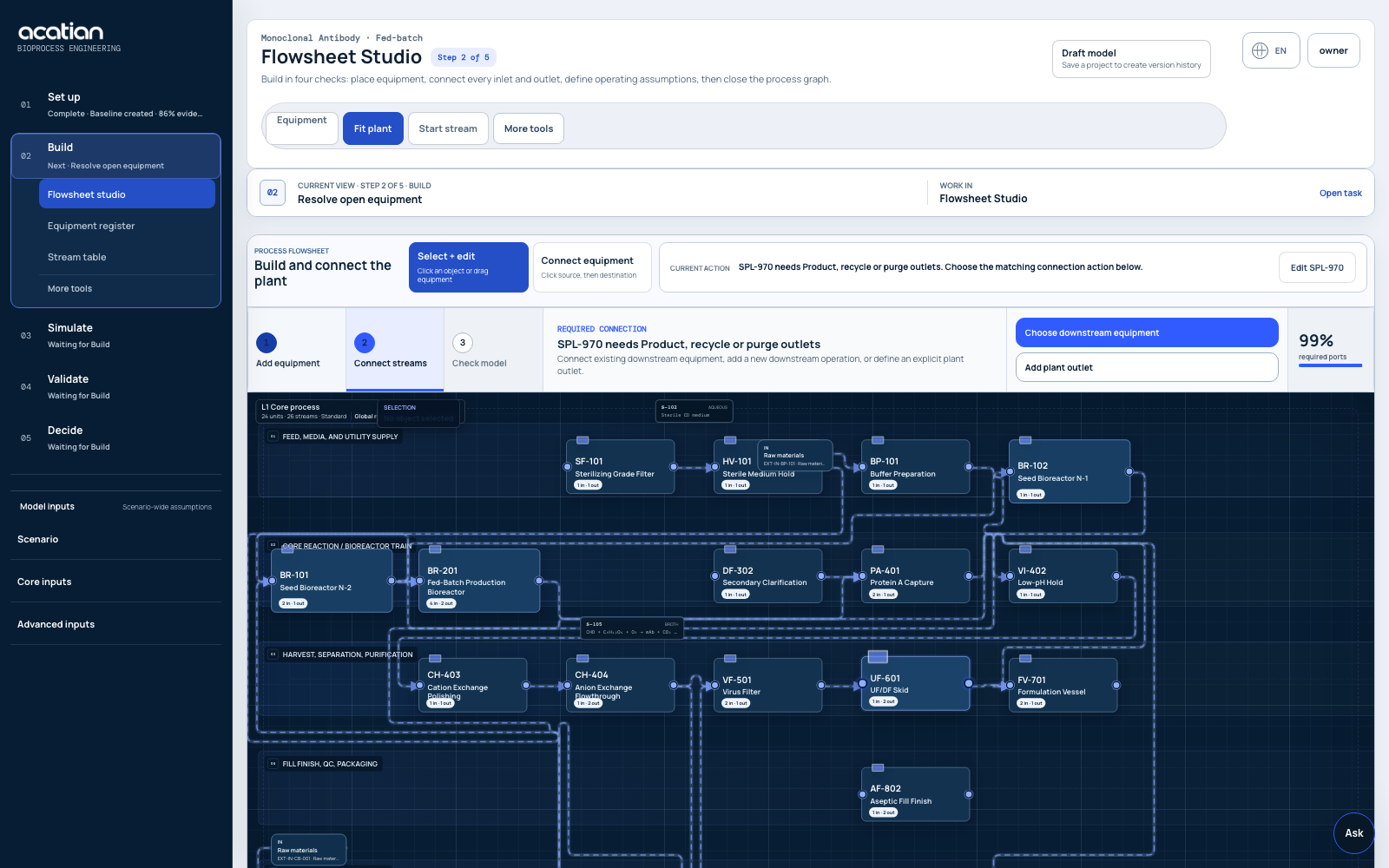
Fed-batch versus perfusion, viable-cell density, titer, OUR, kLa, feeds, metabolites, bleed, and harvest logic.
Disc-stack centrifuge scale-up from qualified Q/Σ, sterile filter sizing from Vmax data, Protein A column sizing and chromatography cycles, pool tanks, buffers, low-pH viral-inactivation hold-time windows, UF/DF buffer exchange and membrane sizing, and formulation.
Campaign scheduling, reusable assets, CIP/SIP, single-use changeover, rooms, WFI generation and storage, clean steam, QC, and release.
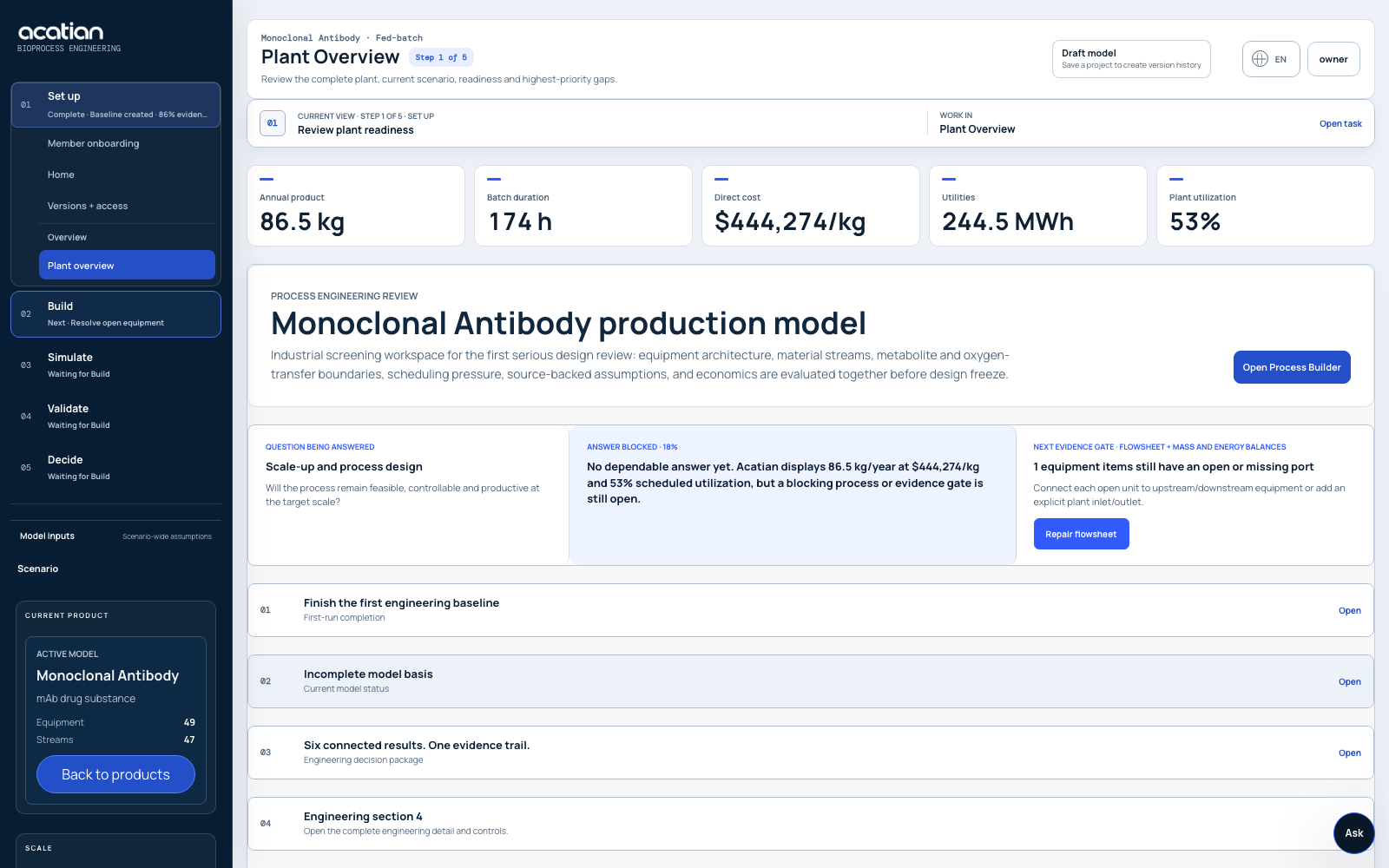
Engineering model basis
Define viable and total cell density, growth and death rates, specific productivity, glucose and glutamine uptake, lactate and ammonium formation, oxygen demand, gas transfer, osmolality, volume additions, harvest, bleed, product degradation, and quality-critical trajectories. For each pool, reconcile component accumulation, reaction, transfer, hold-up, sampling, and loss.
Provide harvest-titer distributions, filter capacities, column diameter and bed height, dynamic binding capacity, cycle yield, clean and dirty hold times, buffer recipes, viral-inactivation window, membrane area, flux, diafiltration volumes, formulation demand, filling rate, room occupancy, labor, WFI, clean steam, and CIP/SIP recipes.
Review batch trajectories, per-step and overall yield, chromatography cycles, resin lifetime, buffer and single-use demand, equipment occupancy, queue and hold-time violations, achievable batches per year, COGS intervals, utility peaks, waste, LCA inventory, sensitivities, and every criterion that prevents the model from being decision-ready.