Equipment states
Setup, processing, transfer, waiting, cleaning, sterilization, maintenance, and available states.
Biomanufacturing scheduling software
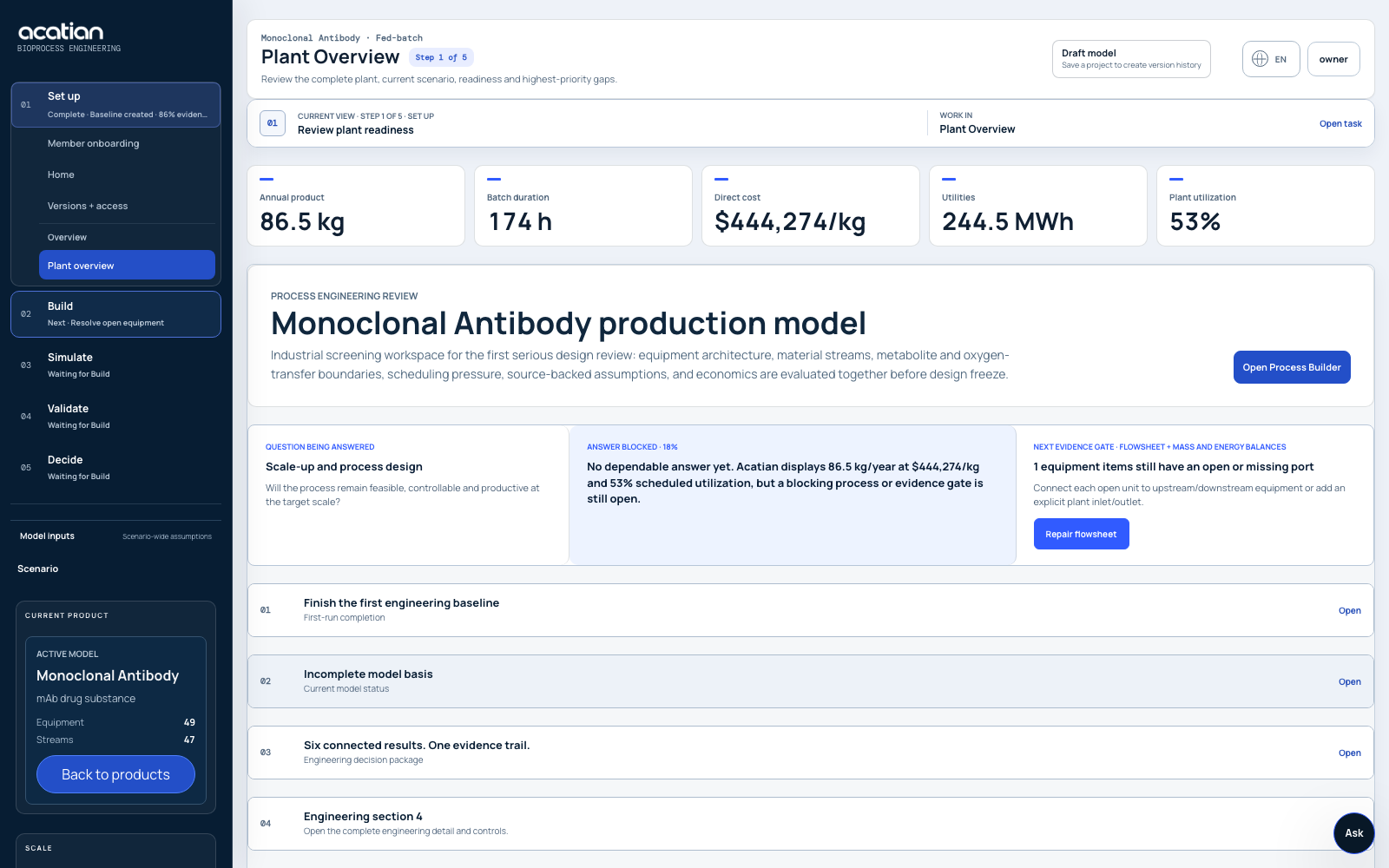
Setup, processing, transfer, waiting, cleaning, sterilization, maintenance, and available states.
Rooms, labor, utilities, skids, tanks, storage, QC queues, and transfer paths.
Occupancy, cycle time, feasible batches, lateness, WIP, utilization, and bottlenecks.
Parallel capacity, campaign sequence, cleaning reduction, outsourcing, and demand changes.
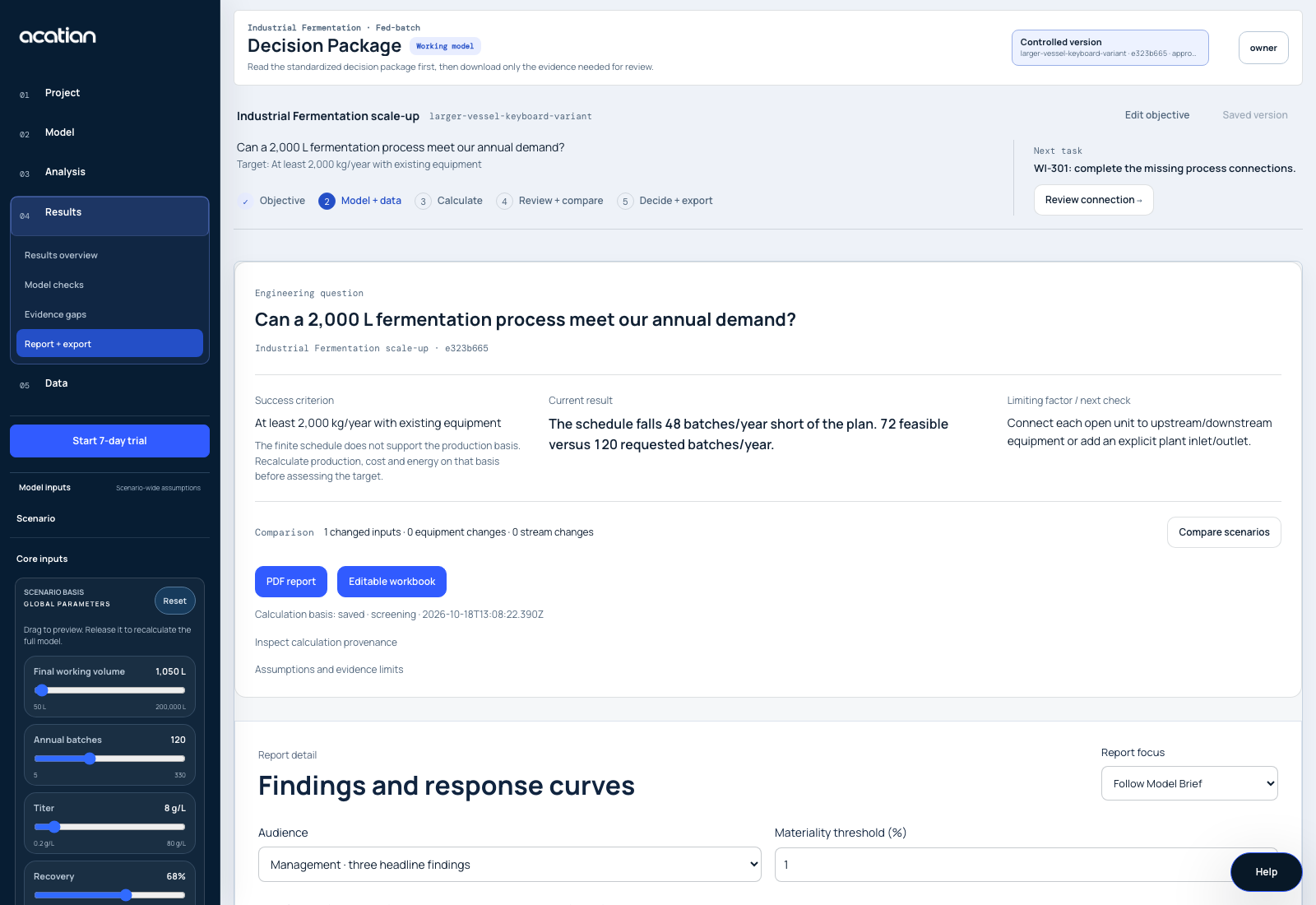
Finite-capacity model basis
Define setup, charge, process, sample, transfer, hold, clean, sterilize and release events with predecessor logic, duration ranges and eligible equipment pools. Reusable reactors, tanks, columns and skids return to service only after the required cleaning, changeover, maintenance and readiness steps finish.
Constrain rooms, operators, utilities, buffer and media preparation, storage, QC, waste handling and transfer paths alongside the main equipment. Add shift calendars, planned downtime, inventory limits, shelf life, maximum hold times and campaign rules so nominal cycle time does not masquerade as achievable capacity.
Report batch start and finish, equipment occupancy, waiting cause, queue length, WIP, inventory, utility peaks, cleaning load, lateness, utilization and the active bottleneck. Compare added equipment, parallel trains, campaign sequence, batch size and demand scenarios on the same annual basis.