Kinetics
Biomass, substrate, product, oxygen, carbon dioxide, maintenance, inhibition, by-products, and variable yields.
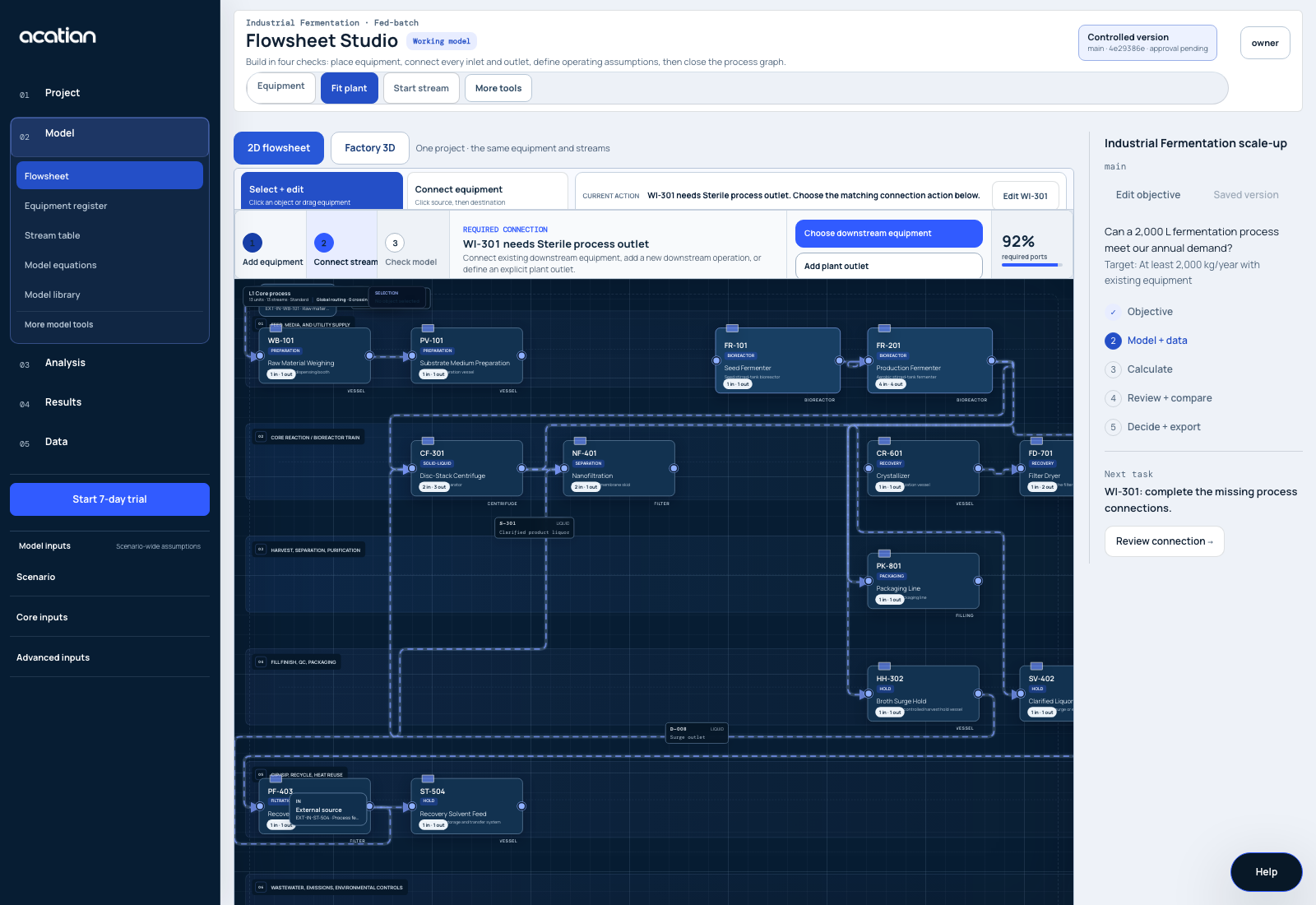
Fermentation scale-up modelling
Biomass, substrate, product, oxygen, carbon dioxide, maintenance, inhibition, by-products, and variable yields.
OUR/OTR, kLa, power per volume, tip speed, gas flow, pressure, heat removal, viscosity, foam, and working volume.
Cell removal, disruption, extraction, membrane steps, chromatography, evaporation, crystallization, and drying.
Feedstock and media, productivity, recovery yield, energy, wastewater, labor, utilization, CAPEX, and uncertainty.
Industrial fermentation model
Represent biomass, substrate, nitrogen, product, by-products, dissolved oxygen and carbon dioxide with Monod, inhibition, maintenance, yield, decay, gas-liquid transfer, evaporation, and energy-balance terms appropriate to the organism. Feed concentration and rate, induction, pH control, antifoam, gas composition, pressure, agitation, and cooling limits must be time-dependent inputs.
Anchor working volume, vessel geometry, impellers, sparger, kLa, power, mixing, viscosity, OUR, heat-transfer area, coolant conditions, foam allowance, exhaust capacity, harvest window, solids loading, filter or centrifuge capacity, extraction or membrane performance, concentration, crystallization, and drying to measured data or qualified sources.
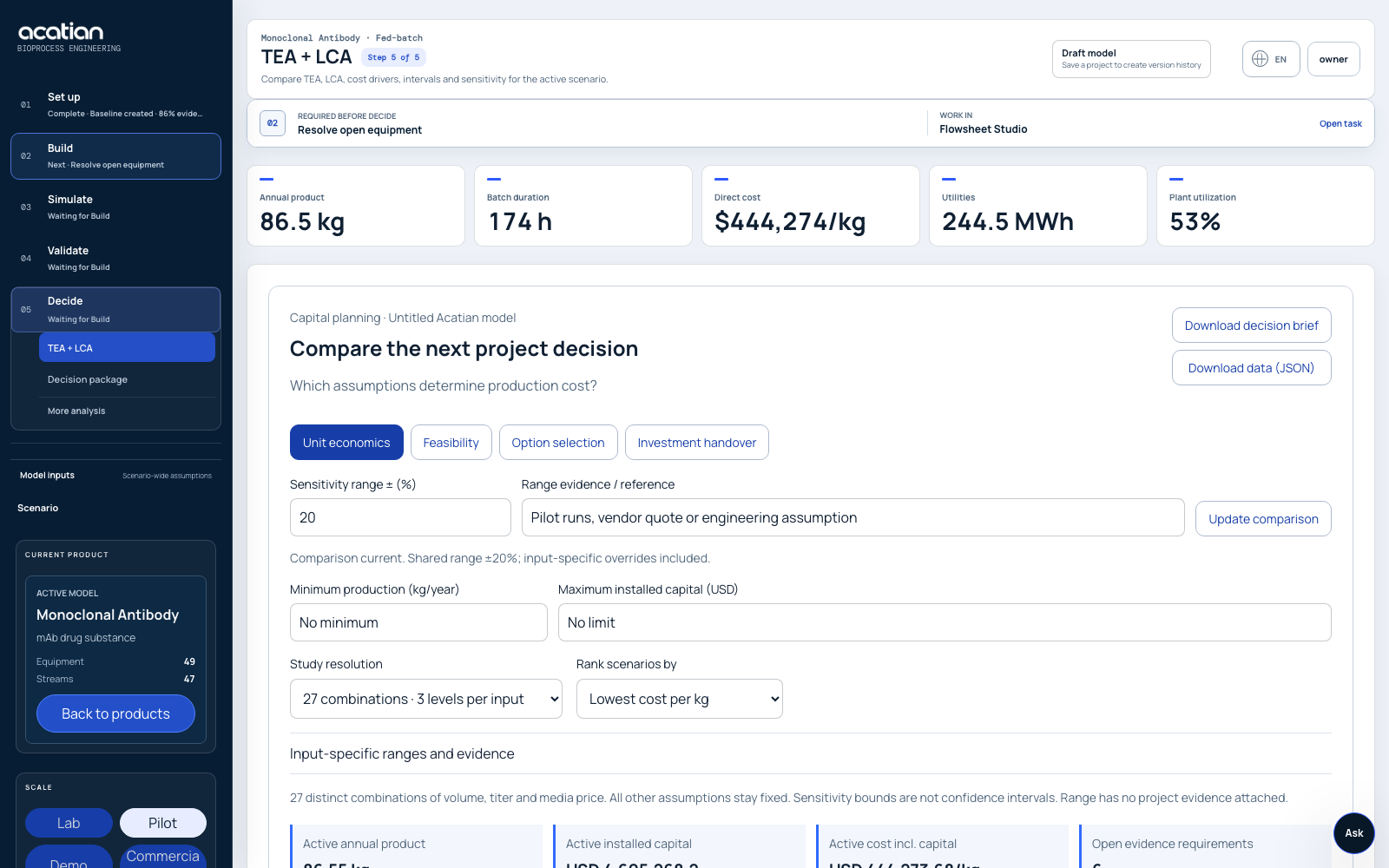
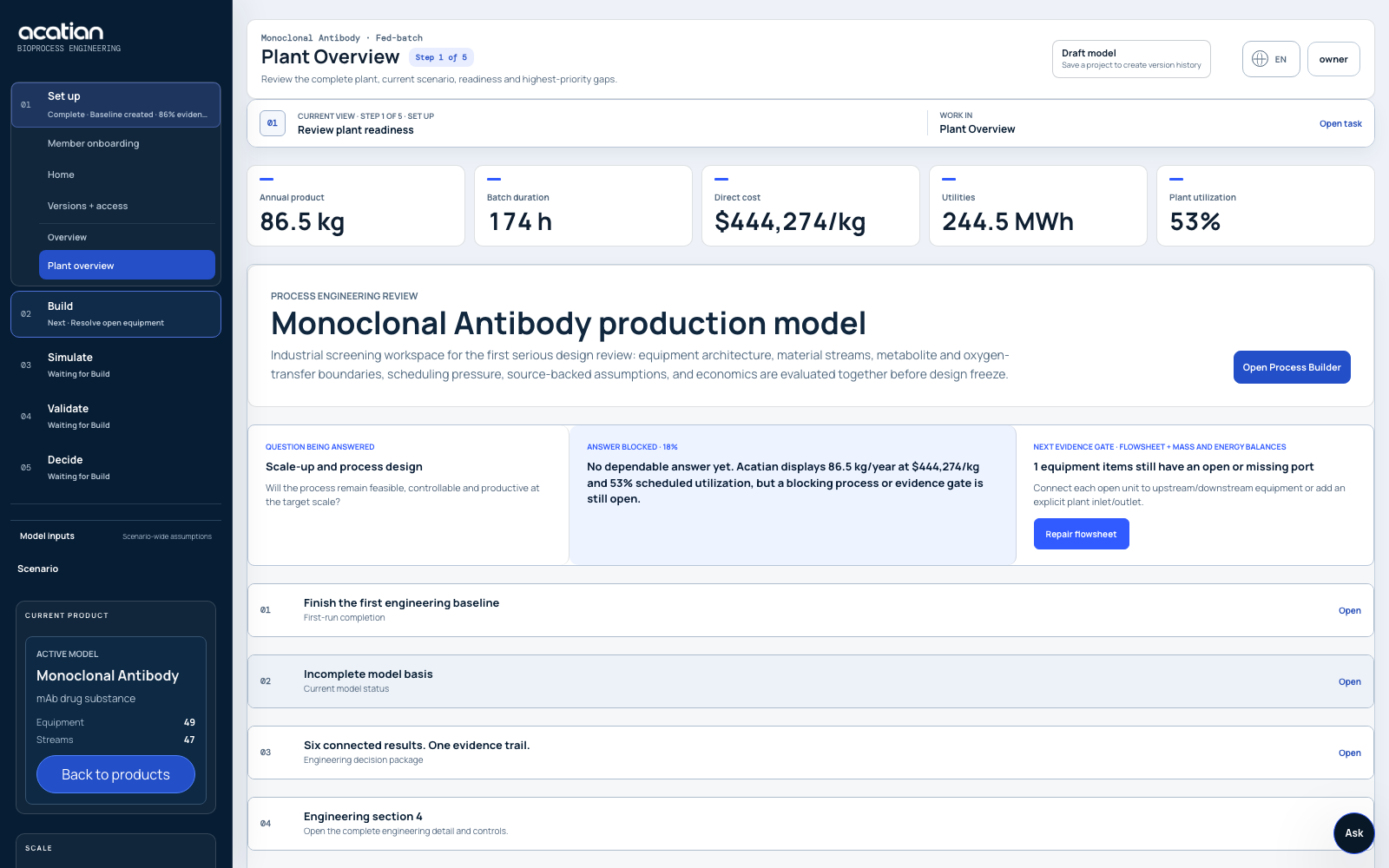
Acatian exposes limiting time intervals, OTR and heat margins, substrate and feed gradients, yield and productivity, annual batches, downstream queues, utility peaks, raw-material and media burden, recovery losses, wastewater strength, CAPEX and OPEX intervals, environmental inventory, sensitivity rankings, and the measurements needed to reduce uncertainty.