Growth and quality
Specific growth, viability, density, substrate uptake, oxygen demand, lactate and ammonium, differentiation, aggregation, and product criteria.
Cultivated meat process modelling
Specific growth, viability, density, substrate uptake, oxygen demand, lactate and ammonium, differentiation, aggregation, and product criteria.
Basal medium, amino acids, glucose, growth factors, supplements, perfusion rate, retention, recovery, recycle, sterility, and storage.
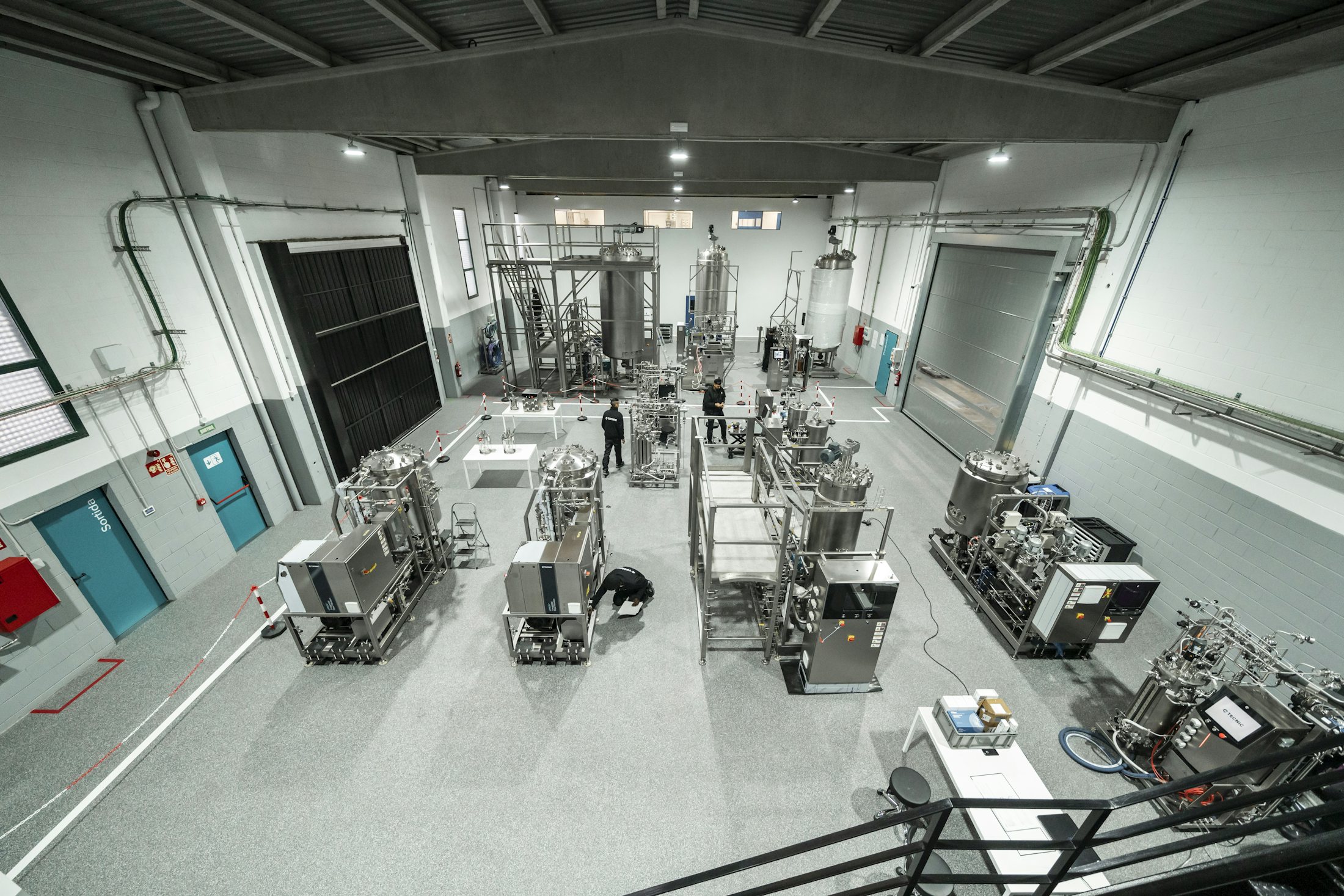
Working volume, seed ratios, mixing, oxygen transfer, shear, heat, cell retention, membrane area, harvest capacity, and parallel trains.
Campaigns, equipment reuse, CIP/SIP, rooms, labor, clean utilities, cold chain, waste, utilization, annual output, TEA, and LCA.
Commercial-scale model basis
Track viable cells, substrates, amino acids, dissolved oxygen, lactate, ammonium, osmolality, growth, death, aggregation, differentiation, retention, bleed, and harvest over time. Record basal medium, supplements, growth factors, feed concentrations, perfusion rate, cell-specific consumption, recycle quality, sterility strategy, and the validity range of every kinetic parameter.
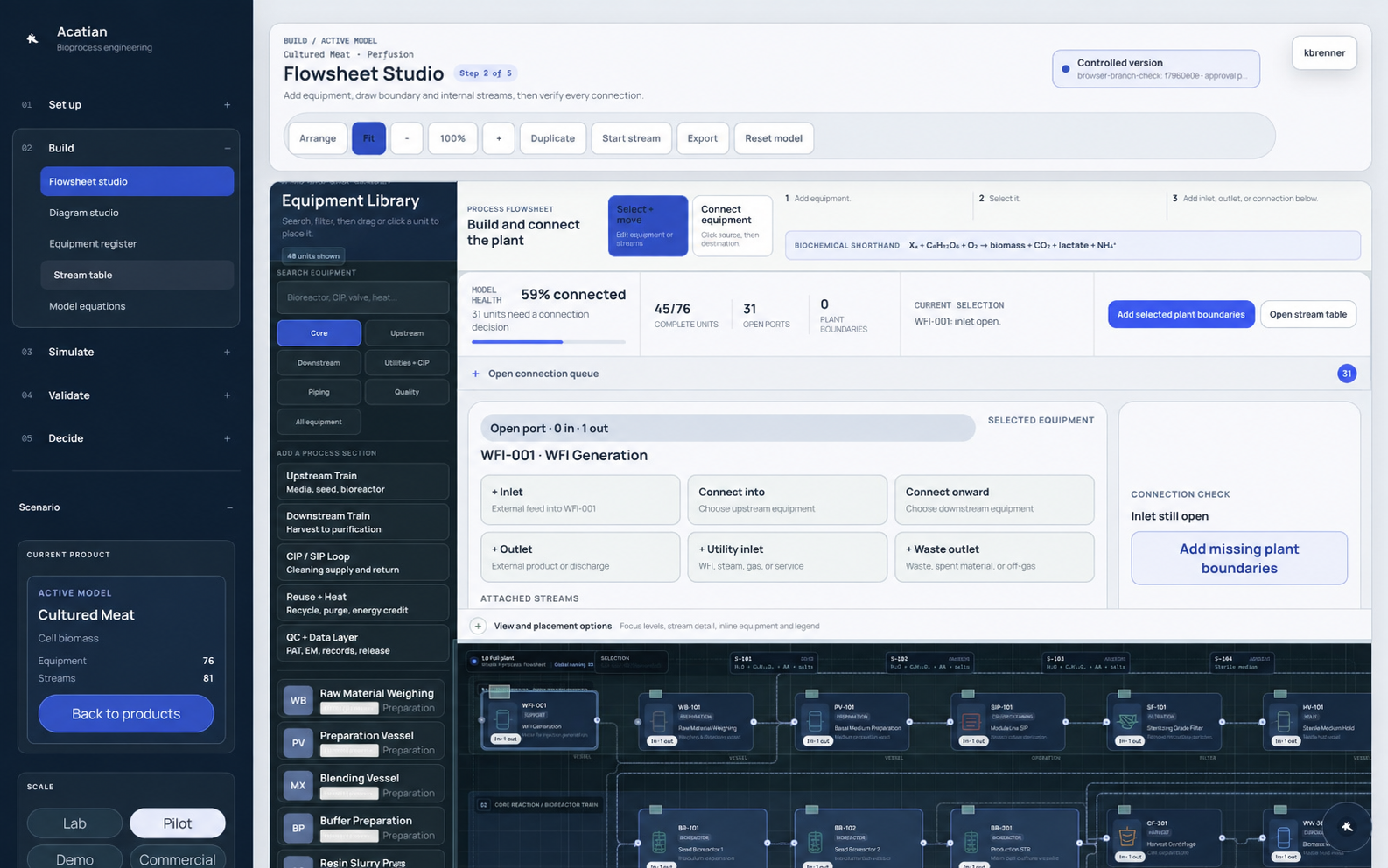
Define seed expansion ratios, working-volume limits, parallel trains, mixing and oxygen-transfer margins, gas demand, heat, shear exposure, cell-retention device area, fouling and recovery, harvest concentration, washing, formulation, scaffold or structuring steps, cold storage, packaging, CIP/SIP, rooms, labor, clean utilities, and release logic.
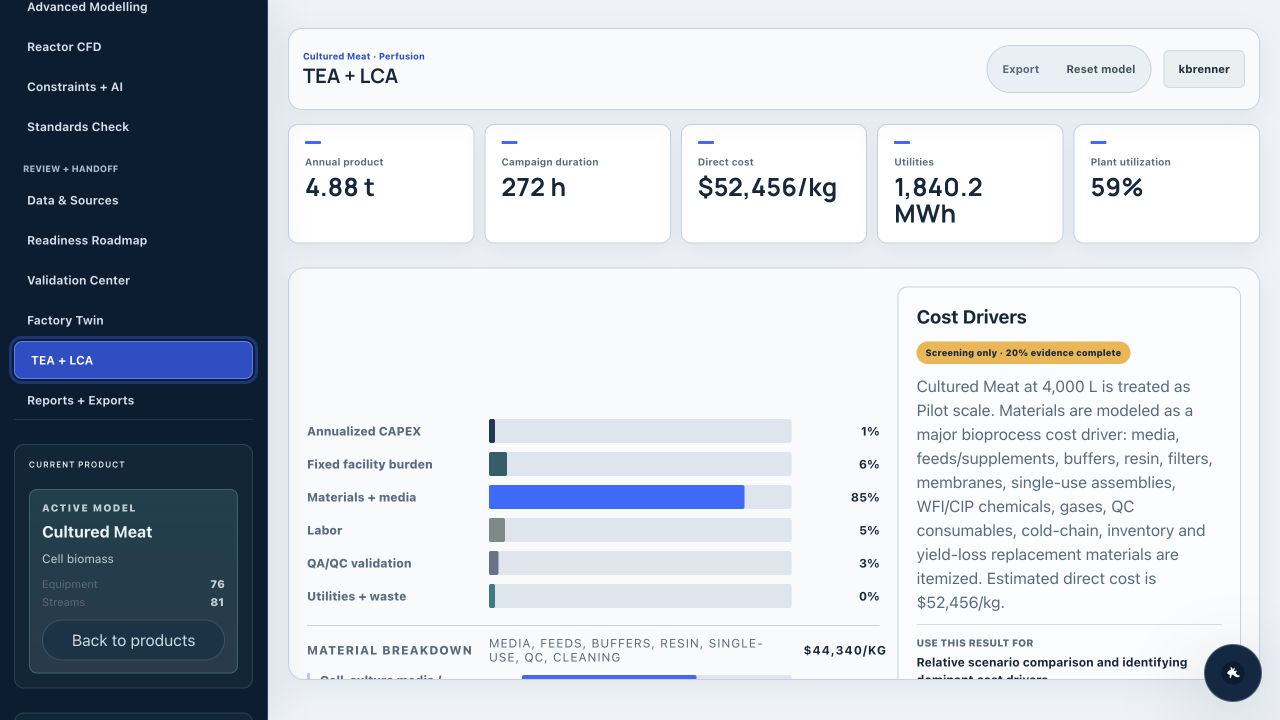
Report medium and growth-factor consumption per kilogram, oxygen, water, electricity, steam, cooling, consumables, waste and wastewater, labor, equipment occupancy, annual output, CAPEX, COGS intervals, climate and resource impacts, allocation choices, dominant sensitivities, and break-even targets for density, yield, price, utilization, and retention performance.